United States Tennis Association (USTA) tournaments serve as the primary on-ramp into junior competition. These local competitions have expanded in recent years to create more entry points nationwide.
Yet historical data and ongoing patterns highlight a steep drop-off among first-time participants, underscoring challenges in retaining young players at the start of the competitive pathway.
According to historical USTA data presented by Bill Mountford, the attrition rate is very concerning.
Of the 97,999 juniors who played one tournament, 38% did not compete in another event during the same year. Furthermore, the attrition continued: roughly 58% had dropped out after two tournaments.
These USTA numbers reflect a broader challenge familiar across youth sports. Research often shows high overall dropout rates, with estimates indicating that 70% of kids quit organized sports between ages 13 and 16.
Common contributing factors to this unfortunate dropout rate in tennis include competition stress, a diminished sense of fun, and pressure from adults—parents or coaches.
One USTA response that has shown clear success in addressing retention is Junior Team Tennis (JTT). This team-based format—emphasizing fun, camaraderie, sportsmanship, and compatible skill levels rather than pure individual results—has delivered strong growth.
Another tactic being deployed is time-based, round-robin-format tournaments.
Early in the developmental pathway, USTA orange ball tournaments for 10 & under players are deliberately structured as one-day, non-elimination events. They commonly use time-based (15 min.) match formats so every participant receives roughly equal court time, along with round-robin play that guarantees multiple matches.
These formats emphasize skill development, match experience, and sportsmanship over pure win-loss outcomes, helping younger players build confidence before progressing to green-ball or yellow-ball competition and eventually ranked L/7 events.
Most USTA green ball events are one-day (or half-day), non-elimination events that usually feature round-robin formats in flights or groups of 3–5 players, ages 9- 11, sometimes with a playoff or compass draw.
They are designed to last roughly 2–4 hours total per player and guarantee multiple matches, continuing the low-pressure, high-volume match experience that prepares kids for the transition into ranked yellow-ball competition.
Tournament directors credit the social, lower-pressure environment for improved engagement and retention, particularly among younger and less experienced players who might otherwise leave after early tournament setbacks.
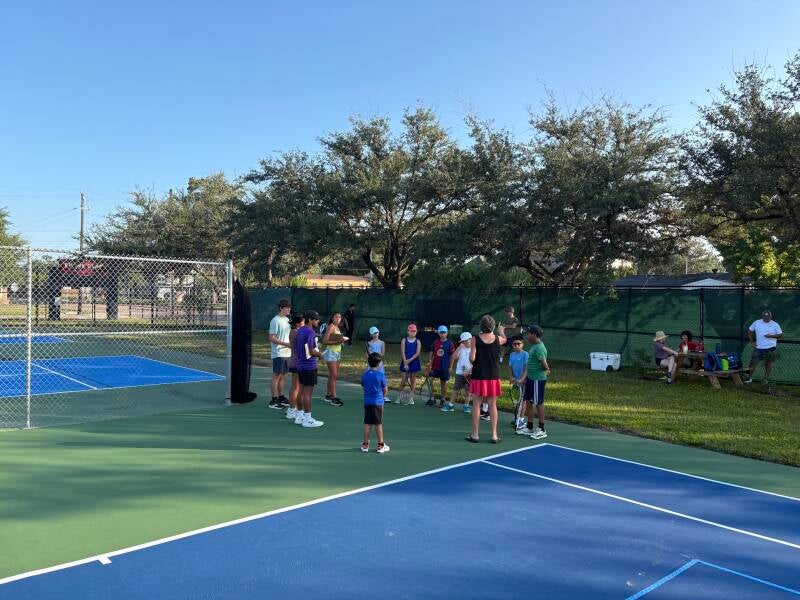
Karen Hackett, the CEO of Space City Tennis and known as Coach Koko, has hosted several Orange Ball tournaments at the Frank Black Middle School Racquet Center in Houston, Texas, and believes that time-based events are best.
"Our participants and parents say they really enjoy knowing how many matches will be played and how long the tournament will be conducted," commented Hackett. "We also provide lemonade and a few tasty snacks."
"We have seen a very high rate of returning participants in our Orange Ball events."
"Another factor is the cost of entering a USTA tournament. We are very focused on reducing the negative impact of cost on participation, especially for Title 1 Houston schools. We generally price entry fees 50% lower than those at commercial clubs and offer financial assistance when needed.”
"We believe no child should be left behind because of lack of financial resources," added Hackett.
Together with the carefully designed orange- and green-ball events, along with JTT engagement, can help more juniors stay in the sport long enough to develop the match toughness needed for individual events like L/7 and beyond.
Written by Don Hackett, husband of Coach Koko.
Add comment
Comments